
Two days to slow down
Ecotourism stays in Fontainebleau and the Gâtinais
A relaxed stay needs very little: a well-chosen base, one main outing each day, a local meal and enough room to change plans.
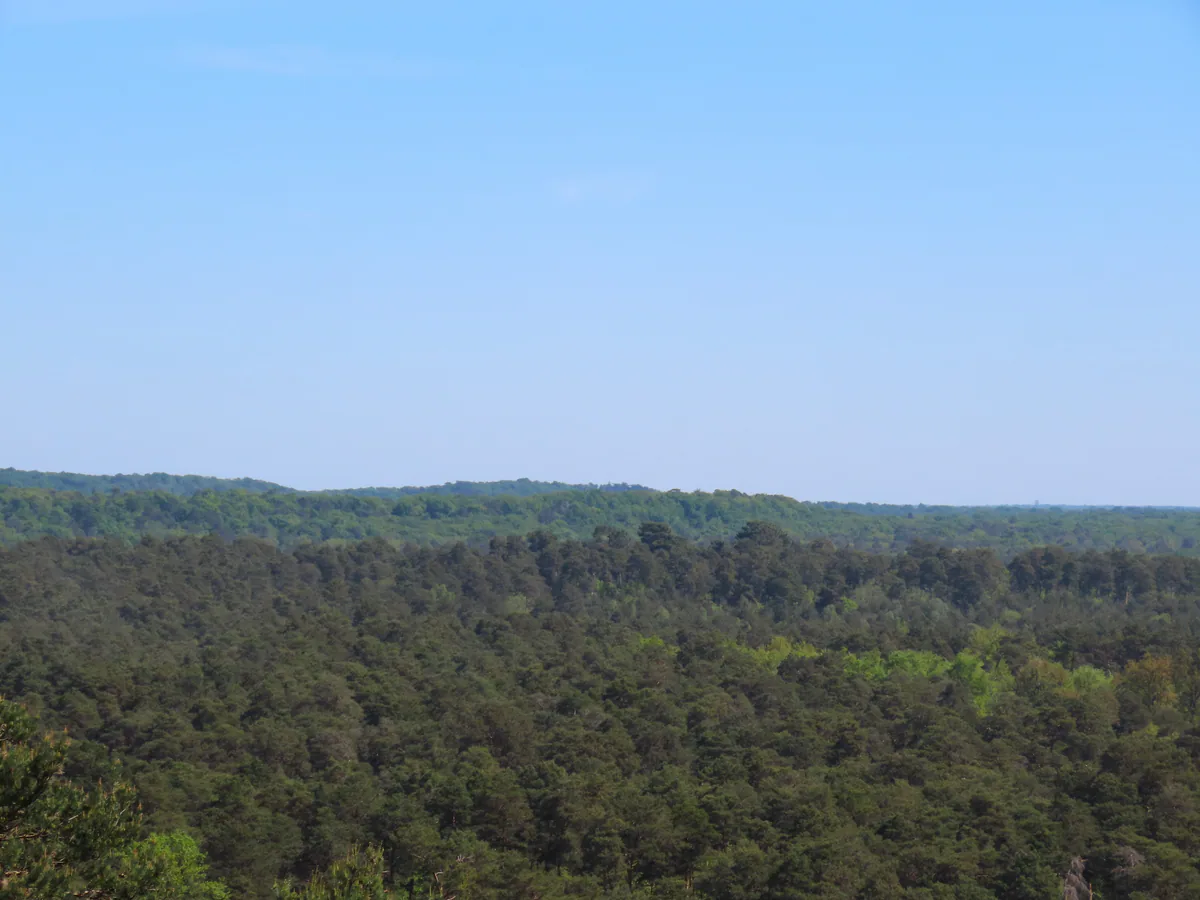
First idea: Fontainebleau and Franchard
Stay in Fontainebleau or Avon. Spend the first day exploring the town and château at an easy pace. On the next day, head to Franchard if the area is open. Call at the Maison de la Biosphère et de la Forêt, then choose a short loop in the Gorges de Franchard.
This plan works well by train when you have prepared the last few kilometres. Read Fontainebleau without a car before booking.
On the first morning, enter the château or begin with its park according to the weather and your interests. The official château website lets you check accessible spaces and choose a visit before arriving. Keep the town centre for lunch and an unhurried walk. If energy remains, a short outing near Avon is wiser than a rushed return trip to the Trois Pignons.
On the following day, Franchard can comfortably occupy half a day. Its short loop, the Maison de la Biosphère and time spent reading the landscape are enough. Add another major visit only after checking the journey home. Without a car, Franchard needs a planned final transfer, and a walk from a railway station may be the better alternative.
Second idea: Moret, Thomery, the Seine and Loing
Choose a base in the valley. Give one day to the old town centres and waterside, then add an activity on the Loing if conditions allow. Apikopa and Nature Loisir Évasion publish their own current options.
The next day, follow a current loop near Thomery. Let a café or market be a real part of the day rather than a timed stop.
In Moret-sur-Loing, let the old gates, bridge and riverbanks provide the thread for the walk. The tourist office introduces the historic centre and places associated with Alfred Sisley. There is no need to visit everything. A wander through the streets, time beside the Loing and lunch can make a very satisfying morning.
Thomery rewards a different kind of attention. Its grape walls, hillside, village and Seine tell an agricultural story best understood on foot. A 9 km loop can begin in the village or at the station, but it should not automatically be added to a long water activity. Divide those experiences across two days and keep a shorter walk for the evening.
Third idea: Milly and the Trois Pignons
Milly-la-Forêt brings together aromatic plants, small-town life and sandy landscapes. Begin with the market or an open heritage site, then devote another half-day to the Trois Pignons.
This area needs more planning without a car. Look at the complete journey before choosing accommodation.
Milly-la-Forêt works well as a day of town streets, market life and aromatic plants, with one visit selected according to current opening. Producers and shops are not a permanent display, so check where visitors are actually welcomed. The food and producers guide helps plan a stop without turning the trip into a shopping tour.
In the Trois Pignons, current access comes first. Sand, pines and open plateaux invite a long walk, but some sectors and links were affected by the 2026 fires. Choose a route that is currently published, never work around a closure, and keep Milly as an excellent alternative when the forest does not suit the day.
A fourth plan for three days
With a third day, you do not necessarily need another corner of the massif. Add an activity that changes the pace: cycling on a current route, an organised canoe trip on the Loing, meeting a producer or visiting a heritage site. The outdoor activity and heritage guides help compare those options.
A balanced sequence might be château and town on day one, forest on day two, then valley or village on day three. Reverse the order when the weather calls for it. Put the most physical day where conditions are best, not automatically on arrival day.
Which base should you choose?
| Your priority | A base to consider | What it avoids |
|---|---|---|
| Château, town and railway | Fontainebleau or Avon | Depending on a car every evening |
| Barbizon and the western forest | Barbizon or a nearby village | Crossing the forest morning and evening |
| The Seine, Thomery and the Loing | Thomery, Moret or Montigny | Repeated connections to the east |
| Milly and the Trois Pignons | Milly or the south-western area | Long returns to Fontainebleau |
A base should not be central on a map. It should be close to your two most important days. Read where to stay to compare areas, then check the exact address and evening journey before booking.
Plan for the day when the forest does not work
Dry weather at departure does not guarantee dry sandstone. After rain, exchange climbing for the château, a museum, a village or a riverbank. Stay out of woodland in strong winds. An ONF closure is not an invitation to search for another way into the same area.
Choose an alternative in the same part of the region. From Fontainebleau, the château and town are the obvious choices. Near Barbizon, the painters’ museums and studios take over. In the valley, Moret and Thomery offer heritage walks. Around Milly, select a place that is open in town rather than crossing the entire region.
Book only what needs booking
Reserve accommodation, guided activities and visits with limited capacity. Leave the market, village walk and pause by the water flexible. This gives the trip enough structure without making every delay stressful.
Download useful maps and tickets, note the last return and carry enough water for the chosen outing. Contact the eco-actors directly when an activity or meeting depends on an appointment. A small number of well-prepared stops creates a richer stay than a list of places ticked off from the car.
Simple rules for a better stay
One main activity each day is enough. Group nearby stops, buy only what you will use and keep an alternative in town or a village. Check the current ONF map before every forest outing, especially after the fires of July 2026.
Choose your base on Where to stay, then contact the eco-actors directly for activities that require a booking.