
A base that makes the whole stay easier
Where to stay around Fontainebleau and the Gâtinais
The best accommodation is not necessarily the place closest to the forest on a map. It also needs to work with your station, meals and first start in the morning.
Fontainebleau or Avon for a first visit
Fontainebleau works well if you want to combine the forest, château, restaurants and town centre. Avon brings you closer to the station and can simplify a trip by train. Check the actual walking distance between the address, station and places where you plan to eat in the evening. The name “Fontainebleau” is sometimes used for a much wider area than the town centre.
Staying in town makes an early start easier for Franchard or Mont Aigu, but it does not remove the final journey into the forest. Work that out before booking.
Barbizon for the forest edge and village
Barbizon offers a pleasant evening in a village shaped by the history of its painters. It is a logical base if your days centre on the western forest. Without a car, check connections and their frequency carefully because the village has no station.
See our walk near Barbizon to judge the pace of the day.
Moret, Thomery or Montigny between the Seine and Loing
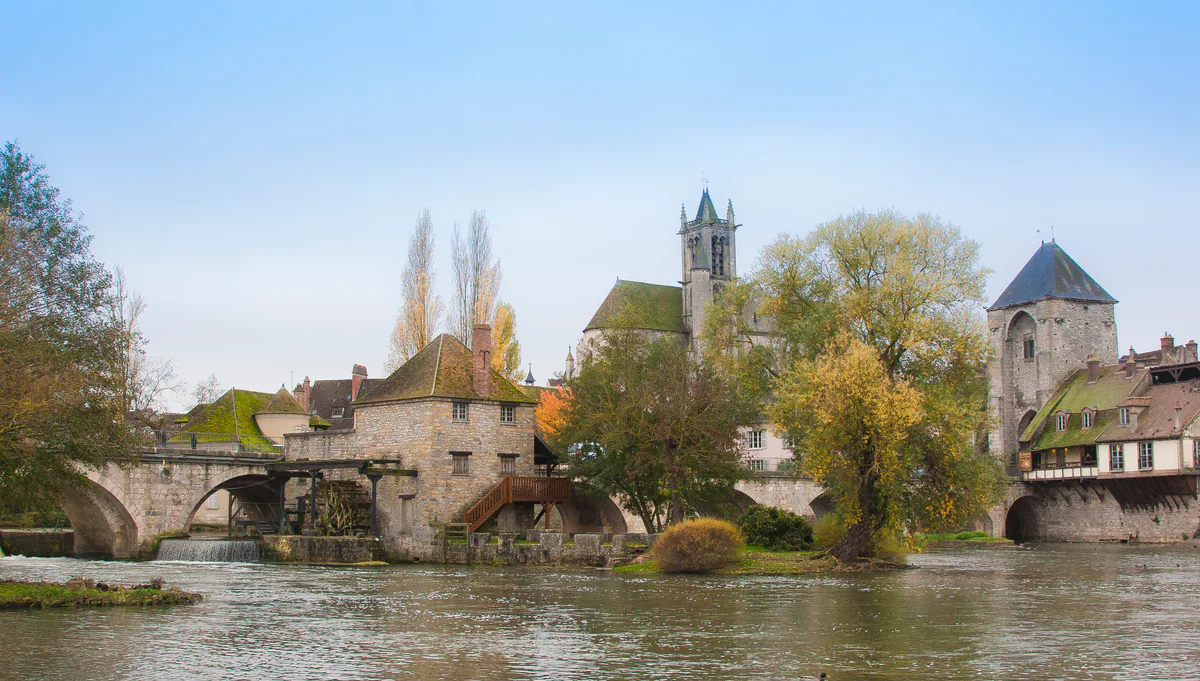
These villages suit travellers who want to mix water, heritage and forest. Moret-sur-Loing has a lively old centre. Thomery lies between the forest and a bend in the Seine, with its history of Chasselas grapes. Montigny follows the Loing south-east of the forest. R-line stations can make these bases practical, but always check the exact journey for your dates.
For plans around the Loing, discover Nature Loisir Évasion. To combine forest, historic fruit walls and the Seine, open our walk near Thomery.
Milly-la-Forêt and the south-west
Milly-la-Forêt is an interesting base for the Gâtinais, aromatic plants and the Trois Pignons. It suits an itinerary focused on this part of the area better than daily return journeys to Fontainebleau. The last few kilometres need careful planning if you do not have a car.
Hotel, guesthouse, gîte or campsite?
A hotel often makes a short stop and arrival by train straightforward. A guesthouse often gives you more contact with local people, though you should confirm check-in times. A gîte suits a stay of several nights and lets you cook, but check what is provided for linen and cleaning as well as any minimum stay. For a campsite, confirm opening dates, pitch type and access without a vehicle.
Before paying, check the full address, total price, parking, arrival times, cancellation conditions and any particular needs in your group. If a walk is your priority, place its starting point and the accommodation side by side on the map. A few kilometres as the crow flies can hide a much longer journey.
Choose a base around the two days that matter most
Write down the two outings you genuinely do not want to miss. If they are the château and a walk from a station, Fontainebleau or Avon will probably make the stay easier. For Barbizon, the Trois Pignons and Milly, a base to the west or south-west avoids crossing the massif every morning. For Thomery, Moret and an outing on the Loing, stay on the eastern side.
This simple method avoids a common trap: booking an appealing address in the middle of the region, then finding that every day begins with a long drive. A good base does not need to place everything nearby. It needs to make your most important days straightforward.
For two nights, changing accommodation rarely saves enough time to justify packing again and working around another check-in. Keep one address and adapt the second day to the weather. On a stay of four nights or more, dividing the trip between Fontainebleau or Avon and the Loing valley can make sense because the two bases create genuinely different experiences.
Without a car, look at the evening return
Being near a station matters, but so does the route between the platform and the front door. Check whether you will be carrying bags uphill, crossing a busy road or walking an uncomfortable stretch after dark. An address ten minutes on foot from a regularly served station may be much more useful than an isolated property described as being “in the heart of the forest”.
Look at evening meals too. Villages can have fewer options after daytime visitors leave, and closing days do not always line up neatly. A beautiful room is less practical if every dinner requires another journey. Our car-free Fontainebleau guide helps build the trip around the railway, while walks from stations compares outings that really do begin at a platform.
With children, a dog or climbing equipment
With young children, ask whether the room works for a quiet arrival, whether a suitable bed is available and where a pushchair can be left. A small kitchen or refrigerator may be worth more than a dramatic extra facility. Find a park, play area or short walk close to the accommodation for the moment when a full day outdoors is no longer appealing.
If you travel with a dog, do not rely on a single icon in a booking result. Ask the property to confirm its conditions, any charges and where the animal can join you. Forest rules are separate from accommodation rules.
Climbers should consider equipment storage, drying wet shoes and legal parking. The most famous sector is not automatically the best base. Damp sandstone can force a complete change of plan, so accommodation with several nearby alternatives makes that change much less disappointing.
The final check before booking
Open the exact address, not just the name of the town. Test a morning journey to your first trailhead and an evening return after dinner. Read what is included, then check the final amount and the conditions applying to your dates. For a late arrival, ask how access is collected rather than assuming that a reception will remain open.
Keep one idea for rain or a forest closure: the château, a museum, a village, a covered market or a café. Well-chosen accommodation does more than provide a bed. It helps the trip remain enjoyable when the day does not follow the original plan.