
Stories of stone, water and forest
Heritage in Fontainebleau, Barbizon and the Gâtinais
Heritage is part of the landscape. Villages, paths, grape walls and works of art tell different stories of people living in the same place.
Choose the story you want to follow
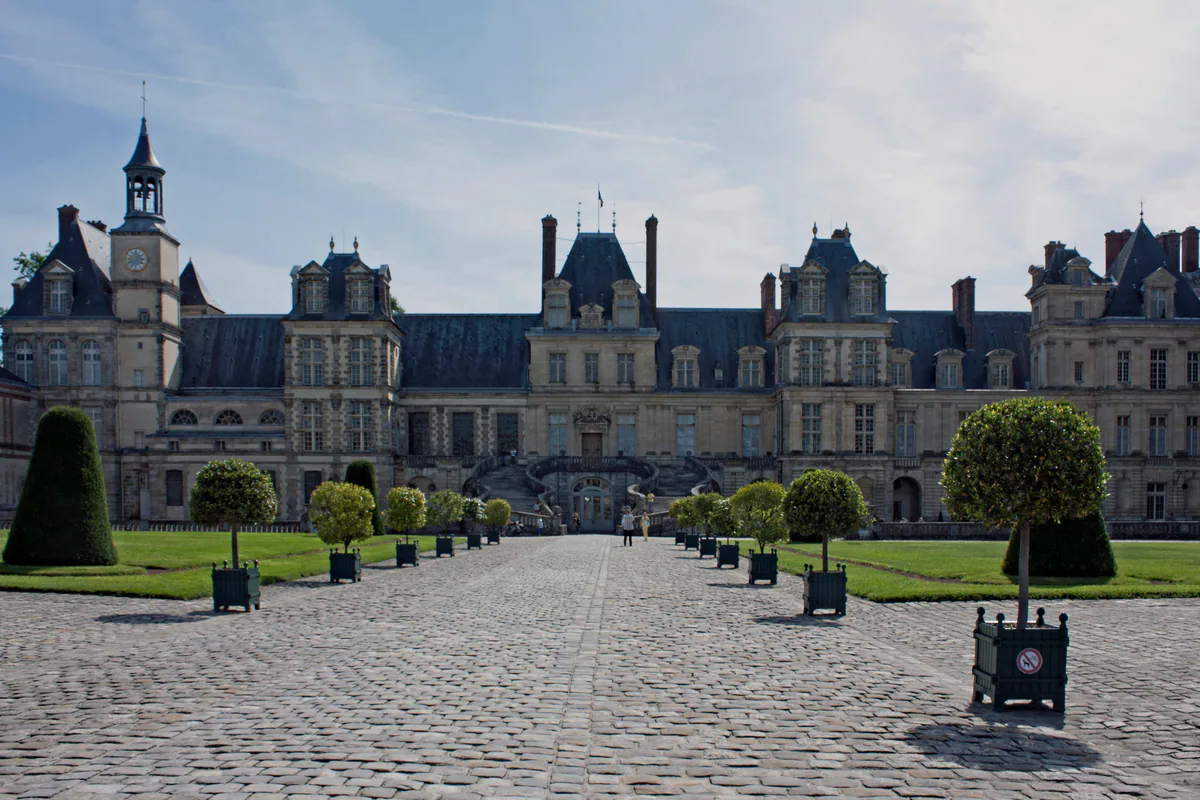
The heritage of the Pays de Fontainebleau does not fit inside one monument. Fontainebleau speaks of royal and imperial power. Barbizon connects painting with landscape. Thomery shows how fruit growing reshaped streets and gardens. Moret-sur-Loing can be read through its gates, bridge and riverbanks. In the forest, paths, junctions and sandstone structures recall the arrival of recreational walkers.
| If you enjoy | Begin with | Continue with |
|---|---|---|
| Grand historic interiors | Château de Fontainebleau | Park, gardens and town |
| Landscape painting | Barbizon | Painters’ trail and the forest edge |
| Rural heritage | Thomery | Longs Sillons, the Seine and quarry-workers’ paths |
| Waterside towns | Moret-sur-Loing | Bridge, gates, church and Loing paths |
| The history of walking | A Denecourt-Colinet trail | A recent guide explaining its markers |
Choose one row for the day. Two places with a clear connection tell a richer story than four unrelated stops.
Give Fontainebleau a full day
The château, gardens and town form one ensemble, not three separate boxes to tick. Check the official Château de Fontainebleau website for the spaces, tickets and events available on your date. The apartments reward attention; the park and gardens change the pace and let you read the building again from outside.
If you tour the interior, do not automatically add a long hike. Keep to the park or central streets and leave a full forest outing for the next day. Our two-day Fontainebleau guide builds that balance without unnecessary journeys.
Barbizon, from painting to path
Artists associated with Barbizon came to work in front of nature long before the village became a cultural destination. The departmental museum of the Barbizon painters occupies the former Auberge Ganne and also uses Théodore Rousseau’s house and studio. Check which spaces and exhibitions are open rather than building the whole day around a single room.
Outside, the painters’ trail links the village, artists’ houses and forest. Our guide to the forest near Barbizon helps you move from the Grande Rue towards the trees and boulders. See the shape of the land after looking at the art, then return to the village with a different eye.
Thomery, a landscape built for grapes
In Thomery, the walls are more than picturesque boundaries. They stored warmth and organised long, narrow plots for Chasselas grapes. The council documents the Longs Sillons lane, where the shape of those plots remains visible.
Our walk near Thomery links these streets with the Seine, old port and paths used by quarry workers. It is an excellent example of everyday heritage: a wall, paved climb or slope explains how the village worked with river and forest. Former grape-storage rooms are often on private property, so never assume that they can be visited.
Moret-sur-Loing, reading a town from the river
The official introduction to Moret-sur-Loing brings together the Porte de Bourgogne and Porte de Samois, bridge, Notre-Dame church, historic façades and places associated with Alfred Sisley. The compact centre is best explored on foot, with the Loing as your thread.
Moret and Thomery complement each other. One concentrates the signs of a medieval town and painted views; the other opens into an agricultural landscape between hillside and Seine. Keep them together over one or two nearby days instead of travelling back to Barbizon between them.
The forest has monuments of its own
Claude-François Denecourt began marking the blue trails in 1842. The ONF explains how he linked rocks, caves, fountains and viewpoints, sometimes adding steps, low walls and shaped passages. Charles and later Maria Colinet continued the work.
To understand these traces, choose a numbered trail and its current documentation. Our Denecourt-Colinet blue-trail guide helps narrow the network to a suitable area. A named cave or painted letter makes more sense within the route sequence than as an isolated point on an app.
Build the visit without rushing
Book what needs booking, check opening information that morning and leave a spare hour. Around a monument, notice the street, garden or riverbank that frames it. In the forest, stay on the path and do not move a stone or object for a better photograph.
For a first day, pair one main place with a short walk. Château and park, Barbizon and woodland edge, or Thomery and Seine are natural combinations. Open our map of the whole forest only after choosing your story. It should reduce travel, not add stops.