
Small adventures that leave big memories
Family activities around Fontainebleau
A successful family day depends less on how many activities you fit in than on leaving room for breaks, questions and a change of plan.
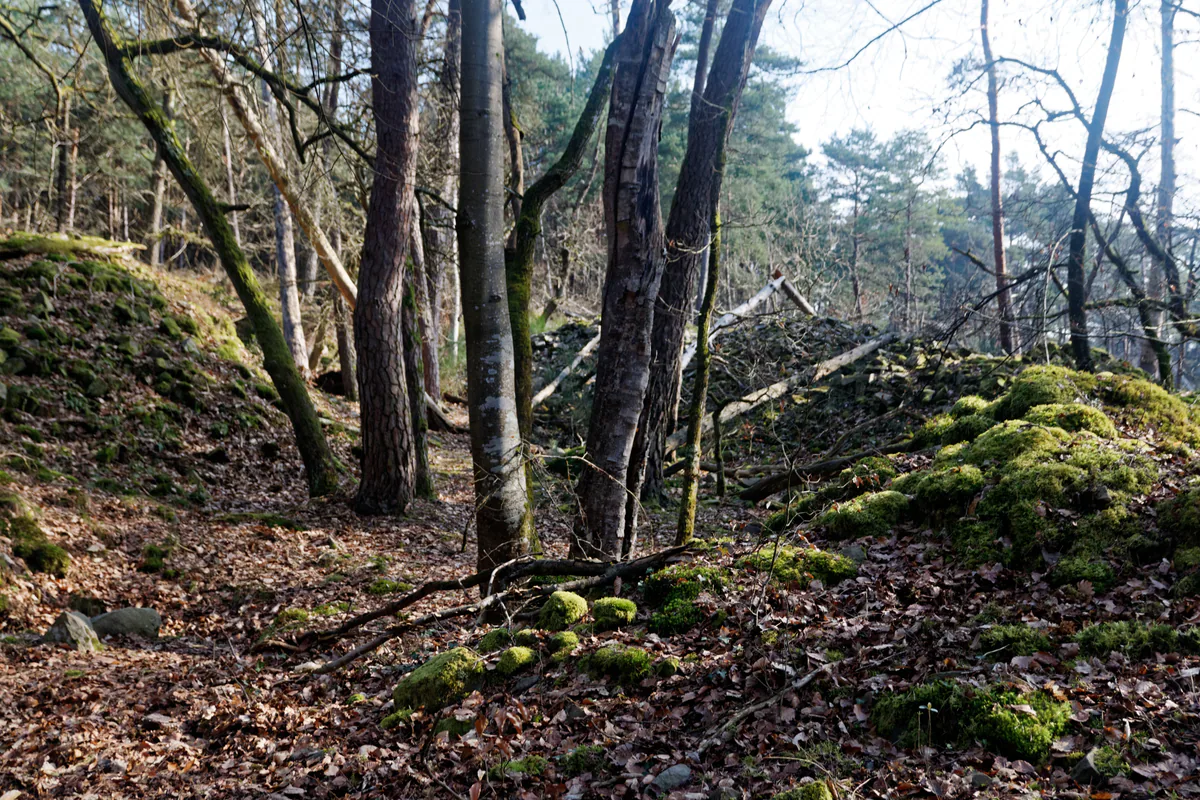
Choose for the children who are actually coming
Distance does not tell the whole story. Two kilometres of sand, roots and short rocky passages can take longer than a much greater distance in town. Start with the child who walks for the shortest time, then ask whether you need a pushchair, baby carrier, regular benches or a very simple way back.
| What the group needs | A sound starting point | What to avoid |
|---|---|---|
| Pushchair or reduced mobility | A route officially listed as accessible, after checking its current condition | Sandy paths and shortcuts between boulders |
| Curious young walkers | A short loop with a visible goal and an obvious turning point | A crossing where you must reach the other station |
| Children comfortable on rough ground | A documented rocky route with frequent breaks | Following a colour without knowing the trail number |
| Teenagers who want a challenge | A longer walk or supervised introduction to an activity | Stacking several sports without time between them |
Our family walks guide compares real routes by terrain, waymarking and possible turning points. This page helps you shape the wider day around weather, food and the group’s energy.
A good first walk
Choose a short loop in an open area and give the outing a simple aim: identify three trees, find shapes in the rocks or listen to the forest for one quiet minute. At Cabaret Masson, six stops give the walk a natural rhythm. At the Perspective de Maintenon, the long avenue and viewpoint better suit children who already have some stamina. Do not choose the latter simply because its distance looks manageable.
Franchard can work especially well when the Maison de la Biosphère et de la Forêt has an activity or exhibition. Check the programme and opening hours before promising a visit. A rocky Franchard loop is not automatically suitable for a pushchair.
Check the ONF access map on the morning you set out. Some areas remain closed or fragile after the fires of July 2026. A sign on the ground decides, even if an older family route sheet shows the path as open.
Match the day to the weather
In dry, mild weather, a morning walk followed by a village, museum or the château gardens after lunch gives the day an easy rhythm. Keep one main activity. Children enjoy a sandstone maze more when they do not have to rush from it to a reservation.
After recent rain, boulders remain slippery and the sandstone needs to dry before anyone climbs. A broad path may still be suitable if the area is open, but wet shoes and puddles can change the group’s mood quickly. Pack spare socks and have a genuine indoor option ready.
During strong winds, thunderstorms, high fire danger or a closure, do not hunt for a supposedly quieter corner of the forest. The château, Barbizon’s museums or the Prehistory Museum in Nemours can fill the day without relying on woodland conditions. In hot weather, start early, shorten the walk and carry enough water. Shade does not protect you from dehydration or a fire-related closure.
Climbing without improvising
Children quickly see the boulders as a playground, but the small arrows painted on the rock belong to sporting circuits. Keep to a height from which the child can climb down unaided, stay within reach and avoid areas where a climber may fall. Never place a picnic or pushchair in a landing zone.
A guided introduction can teach spotting, safe descents and the use of crash pads. Ask the professional directly about accepted ages, duration, meeting point and equipment. Read Bouldering in Fontainebleau to understand the terrain before booking.
The sandstone needs time to dry after rain. Swap the climbing session for a village visit or an indoor activity.
Discovering the Loing
A walk in Moret-sur-Loing or Thomery lets the whole family enjoy the waterside without committing to a river activity. For canoeing, Apikopa and Nature Loisir Évasion publish their current options. Ask about minimum age, swimming ability, equipment, the actual duration and transfers before booking.
Do not treat the river as an automatic wet-weather alternative. Water level, current, thunderstorms and the operator’s instructions all matter. If conditions are unsuitable, a walk through Moret or around Thomery’s historic grape walls keeps the water and landscape theme without launching a boat.
Riding needs the same precision. Arbonne Équitation and Caval&go let you check their current offers. Ask whether the activity is a first encounter, lesson or trail ride, what experience is needed and whether an adult must accompany the child. Age alone does not describe how comfortable a child is around an animal.
Three real shelters for a rainy day
The Château de Fontainebleau is the simplest choice from town. Check the official calendar for closures, tickets and family formats, then choose an aim that fits the children’s attention span instead of trying to see everything.
In Barbizon, the departmental Painters’ Museum occupies the former Auberge Ganne and Théodore Rousseau’s studio-home. The connection between artists and the forest gives a shortened outdoor walk a satisfying second chapter. Workshops and tours change by season, so check the museum programme before travelling.
In Nemours, the Île-de-France Prehistory Museum follows the region’s prehistory and protohistory. Its calendar regularly includes demonstrations and family workshops, each with its own age guidance and booking arrangements.
For each venue, check pushchair access, cloakrooms, accessibility and opening hours on the official site. A dry interval can then be used for a village or garden stroll without starting a hike far from shelter.
Water, toilets and breaks
Carry the family’s full water supply from the start. Water points in the forest are scarce and may depend on a building being open. The Fontainebleau Tourism FAQ also notes that there are no public toilets at the Gorges de Franchard car park. Use town facilities before reaching the trail.
Offer a snack before energy collapses rather than afterwards. For a child, the best turning point may be a cave, pond or known junction. Agree it at the start: “we decide there” is easier than negotiating when everyone is already tired.
The bag that saves the day
Pack water, snacks, a waterproof layer, spare socks, a small first-aid kit and bags for rubbish. Add a tick remover. Download the map, note the trailhead name and keep the phone charged. In the woods, check regularly that the group is together, especially after a junction or a stop among the rocks.
Back at your accommodation, check skin, folds, scalps and clothing for ticks, then look again the next day. The French national health service’s tick-bite guide explains how to use a tick remover and which symptoms to watch for afterwards.
For a longer stay, choose a base with easy meals, toilets and transport on Where to stay. A smooth start in the morning is often worth more than an impressive list of facilities. The tourism office’s family selection is the place to confirm activities and events offered on your dates.