
Sandstone, movement and patience
Bouldering in Fontainebleau: a beginner's guide
Bouldering looks simple because there are no ropes. Good spotting, well-placed pads and completely dry sandstone make all the difference.
Why an introductory session is worthwhile
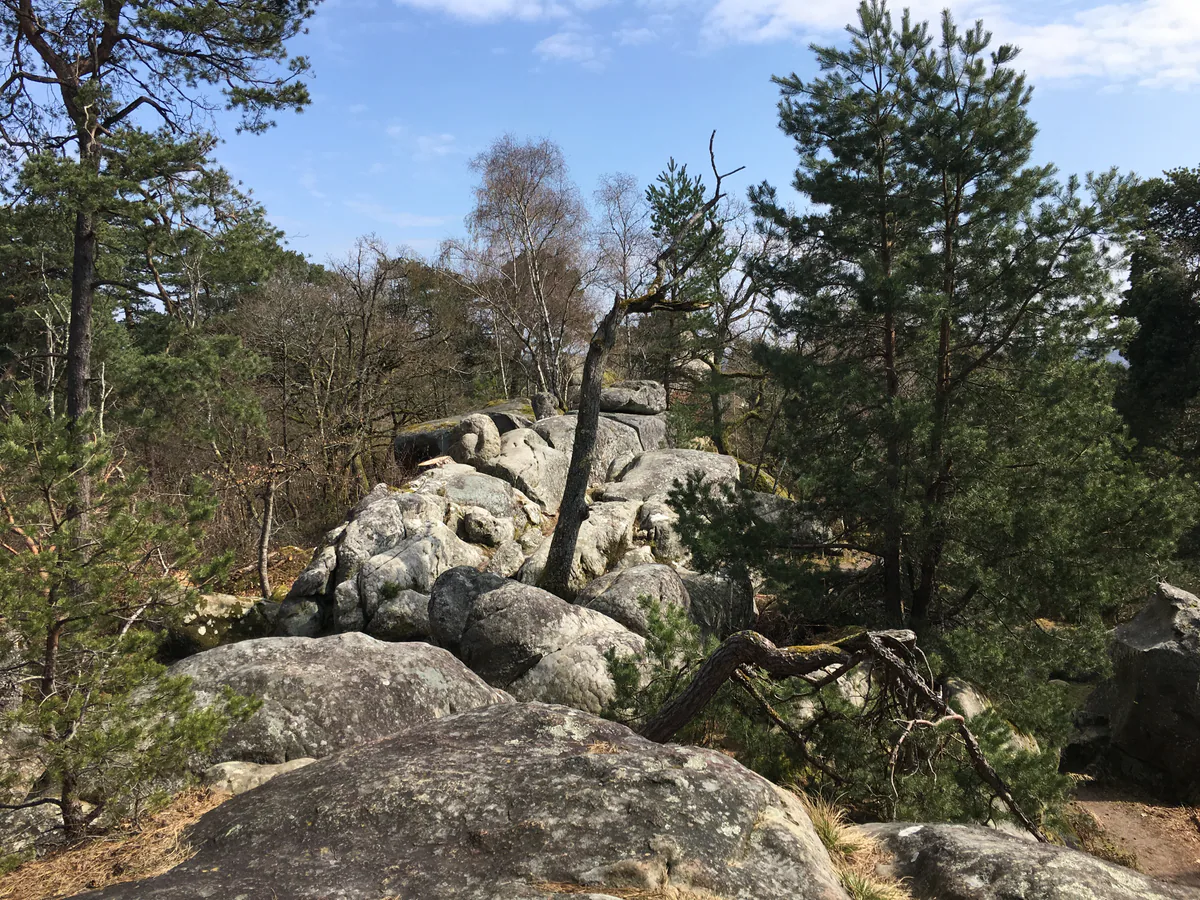
Fontainebleau bouldering takes place on sandstone blocks without ropes. The height is limited, but the landings are uneven and the moves require technique. An instructor can show you how to fall, spot a partner, position pads and choose problems suited to your level.
Nature Loisir Évasion is one of the local operators offering climbing activities. Compare the formats and check the instructor’s qualifications, meeting point, equipment included and arrangements for rain.
Essential equipment
Proper climbing shoes, several well-joined crash pads, a soft brush made for rock and a small mat for cleaning your soles are the basics. A crash pad alone does not make a fall safe. Think about the landing zone, move the pads between attempts and keep spotting until the climber is back on the ground.
Use chalk sparingly and brush away visible marks. Never use a wire brush. Take away all tape, wrappers and rubbish.
The sandstone must be dry
Do not climb in the rain or while the rock still holds moisture. Wet sandstone wears away and holds can break. Wind or a brief spell of sunshine does not mean a boulder is dry beneath the surface.
Use a damp day for a walk on an authorised route, a visit to Fontainebleau or time in a village. The rock will still be there when conditions improve.
Choosing an area and circuit
A coloured circuit links problems of gradually increasing difficulty, but grades vary and the same move feels different for different body types. Begin low, learn how to climb down and save some energy for the end.
Rocher Canon and the Trois Pignons are well known and can be very busy. Our Rocher Canon page explains how the area is shared. For the Trois Pignons, carry extra water and a proper map.
Before every outing, check the ONF access map. Closures have changed since the fires of July 2026.
Sharing the space
Do not occupy a boulder for too long, keep bags and food clear of landing zones and watch children closely. Speak to other groups before moving their pads. Leave amplified music at home. The forest is a shared place, not a private gym.
Use an authorised parking place and keep barriers clear. A good session begins with access that causes no problems for local people or emergency services.