
Forest, river and villages by bicycle
A cycling day around Fontainebleau
A good cycling day here is not measured by kilometres alone. It connects one landscape, an enjoyable stop and a straightforward journey home on a route that suits the group.
Begin with the kind of day you want
The Pays de Fontainebleau offers several very different kinds of cycling. The Seine and Loing rivers suit a steady ride broken up by villages. Links between Fontainebleau, Barbizon, Bois-le-Roi and Samois combine forest with heritage stops. Roads through the massif feel wilder, but they are not all quiet, and a forest track is not automatically open to bicycles.
Before drawing a loop, decide what matters most: a long ride, an easy introduction for children, time in a village, arrival by train or simply lunch beside the water. One clear purpose usually makes a better day than a large circuit filled with hurried detours.
| Your priority | A practical starting point | A sensible way to build the ride |
|---|---|---|
| River scenery and villages | Bois-le-Roi or Moret-Veneux-les-Sablons station | Choose a section of the Scandibérique and arrange the rail journey home |
| Forest and an artists’ village | Fontainebleau or La Faisanderie | Follow the published link to Barbizon and return the same way if necessary |
| A first family ride | A station close to a greenway | Plan a short out-and-back with a turning point agreed in advance |
| A travelling day by bicycle | Bois-le-Roi, Moret or another stop on the cycle route | Download the roadbook, limit visits and leave time for the train |
The official Pays de Fontainebleau cycle-route collection is the most useful place to begin. Open the individual route, download its roadbook and GPX track when available, then check whether the stated distance includes the connections from your station, accommodation or hire shop.
Option 1: follow the Seine and Loing
The local section of the Scandibérique links places including Bois-le-Roi and Moret-sur-Loing. It is a good choice when you want river views, contrasting villages and a final walk around a historic town. The official La Seine à vélo route page provides a track and roadbook to examine before setting out.
Do not turn the idea into an out-and-back automatically. Measure the section that genuinely suits your pace and look at the available stations before choosing a direction. A visit to Moret-sur-Loing, lunch and a few pauses beside the water can easily fill much of the day. With children, it is better to save time for getting off the bikes than to race for a train late in the afternoon.
Conditions can change along a signed cycle route. A protected stretch may lead to a shared street, an intersection or a busy pedestrian area. The name of the route is never a reason to stop reading signs, slowing down and giving way where required.
Option 2: connect Fontainebleau and Barbizon
The Fontainebleau to Barbizon green link is marked “FB” and can be joined near La Faisanderie. It provides a clear thread between the forest and the painters’ village. This works well if you enjoy alternating an easy ride with a café pause and a small cultural visit.
Examine each connection separately. You must first reach the marked link, follow it without confusing its signs with other forest markings, then organise the return. A less experienced group can turn around early. Stronger riders can spend longer in Barbizon, but should not improvise a new route through the massif as a shortcut.
Greenways and quiet links are shared with people on foot. Travel at a speed that lets you stop, warn people gently and leave room for children, dogs with their handlers and anyone moving slowly. A bell is a courteous warning, not a demand for the path to be cleared.
Option 3: make a modest ride from a station
For a first day, the easiest plan to control is often an out-and-back from Fontainebleau-Avon or Bois-le-Roi. Join an appealing section, stop while everyone still has energy and return along the same route. It may look less ambitious on a map, but it leaves time for the château, a park, a market or the riverbank.
At Bois-le-Roi, the tourist office’s published cycle circuit has a roadbook and downloadable track. In Fontainebleau, identify the route towards the Grand Parquet and neighbouring green links instead of entering the first track beneath the trees. If you hire locally, ask where and when the bicycle must be returned and what equipment is included.
A forest road is not necessarily a cycle path
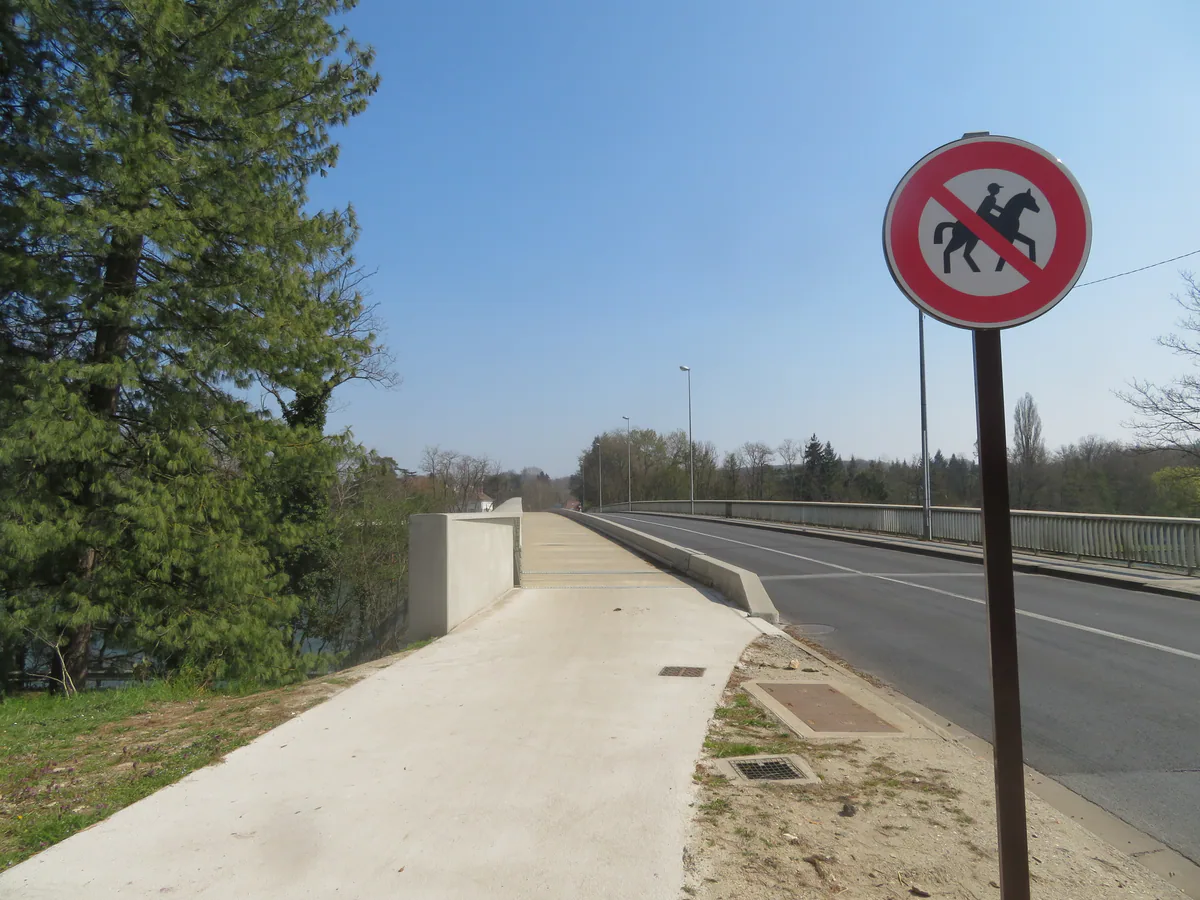
A Fontainebleau map shows a dense web of roads, tracks and footpaths. Their appearance on a screen tells you nothing certain about the surface, traffic or right of access. The tourist office notes that narrow sections of the blue walking trails are not open to bicycles. Stay with a published cycling itinerary and respect every barrier and prohibition you encounter.
Check the ONF access map for Fontainebleau forest on the morning of the ride. A closure, work site or signed diversion on the ground always takes priority over a saved phone track. Never go around a barrier to rejoin the line on your screen.
Deep sand is tiring and makes steering less precise. Wet leaves, roots, loose stones and shaded descents also require more braking distance. A town bicycle may be right for a surfaced route, while loose ground requires suitable tyres and confidence. Check the individual route description rather than choosing a bicycle from distance alone.
Bring a bicycle on the train
A ride between two stations can save backtracking, but the train needs to be planned before the cycling. Carriage rules vary with the time, type of service and crowding. Read Transilien’s current answer on taking bicycles aboard, then search for your dated journey with Île-de-France Mobilités.
Never assume that an unfolded bicycle has a guaranteed space. Put it in the indicated area without blocking doors, aisles or seats, and prepare to leave before the train reaches your stop. TER services on the same railway can have different conditions. Our Fontainebleau without a car guide explains the useful stations and how to build a realistic return.
If several people are travelling with bicycles, avoid relying on the last possible service. Save a second option and locate the station entrance before the ride. One puncture, long break or wrong turning can quickly use the time you held in reserve.
Check the bicycle and the people riding it
Test the brakes, tyre pressure, steering, chain and saddle height before reaching the trail. Carry a spare tube or repair material compatible with your tyres, tyre levers, a pump, a lock and a power bank. An electric bicycle also needs a generous battery margin, especially when cold conditions, hills or repeated starts consume more power.
France’s official page on compulsory bicycle equipment covers lights, reflectors, bells and visibility rules. A correctly fitted helmet is a wise choice for everyone and is legally required for children under twelve. Add water, a rain layer, a snack and a small first-aid kit suited to the group.
With children, place an adult at the front and another at the back when possible. Agree how to stop, cross and regroup. Reach the turning point before fatigue begins, not after. An ice cream, a garden or ten minutes watching boats is a perfectly good destination for a ride.
Leave room for proper stops
A satisfying day includes at least one pause when nobody watches the clock. In Moret, lock the bikes and explore a few streets beside the Loing. In Barbizon, walk through the village instead of weaving among visitors. Near Fontainebleau, pair a short ride with one heritage site or a well-planned picnic. See and do will help you choose one visit that fits naturally.
Check shop hours before relying on late refreshments. Fill bottles in town and never treat a forest spring or pond as drinking water. Carry every scrap of waste to a suitable bin. Stoves, barbecues and fires should stay at home when you visit the forest.
The five-minute check before departure
Open the weather forecast, the ONF access map, the official route page and the journey planner for your return. Save the map offline and share the route with the group. Finally, make sure everyone understands the distance, shared sections and the time at which you will turn back.
If heavy rain arrives, strong wind affects the trees or a closure covers your route, shorten the ride or replace it with a visit. The bicycle will still be there tomorrow. A short, clear route with one memorable stop is already an excellent way to see Fontainebleau differently.